How it started
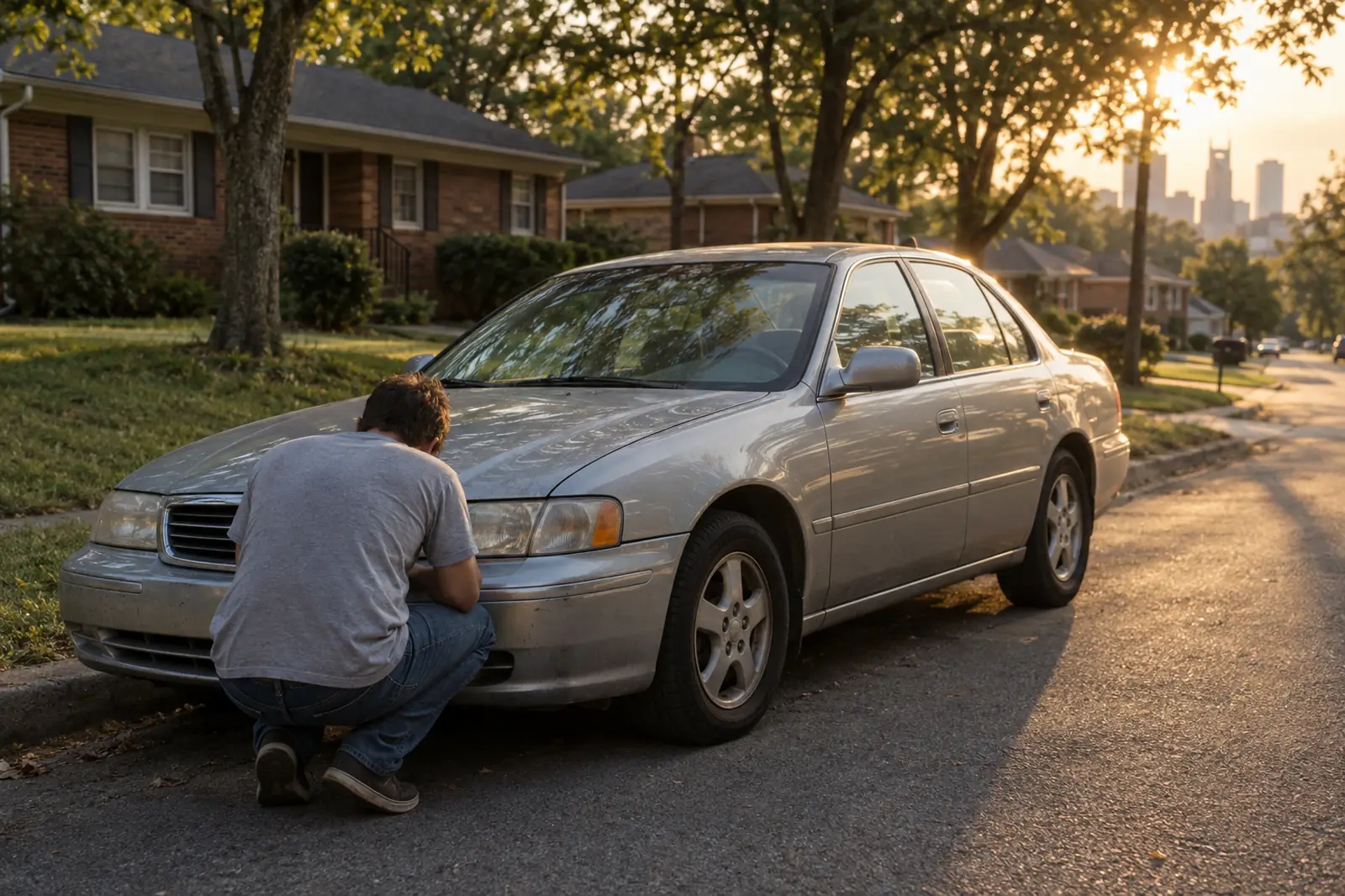
I spent about four weeks this summer trying to buy my daughter a car for college, shopping for a used car on Facebook Marketplace. I ended up buying a 2007 Toyota Avalon with 169,000 miles. It was listed at $6,000, and I negotiated it down to $5,000 to cover tires and an alignment.
The process was much messier than I expected. There were lots of flippers who had bought the car days earlier. "Private sellers" who were clearly small used-car lots, with several people from the same business listing the same car. Plenty of scam listings, and I can't tell you how many sellers never answered my questions. And more than a few title problems — missing, salvage, or simply not matching what was claimed. You learn the signals quickly, but it burns a lot of time.
On top of all that noise, the thing I got most wrong was mileage. I started with a number in my head, and anything past it was a signal to walk away. Most advice I found online worked the same way — 150,000 was the usual line, sometimes 100,000.
I learned that number is close to meaningless on its own. An Avalon at 169,000 miles is a car with most of its life still ahead of it. A turbocharged car at 130,000 can be a money pit that eats a transmission before you've had it a year. Same odometer, completely different risk. What actually decides it, in rough order of how much it matters:
- The specific engine and transmission, not the brand. Manufacturers put different engines and transmissions in the same model, and they age differently. Some have known, documented problems.
- The model year. A lot of the bad failures are limited to a narrow window. Once the part gets revised, the problem mostly stops. Two cars that look identical on Marketplace can be on opposite sides of that line.
- Whether the fix is documented. A known issue with a known fix and a known cost is something you can negotiate around. The intermittent mystery problem is what kills you.
None of this is secret. It's in the recall databases and owner forums. The problem is that nobody is going to look up forty cars in an evening while scrolling. Most people look up none of them and find out afterwards.
That was me. Late in week three, after enough wasted time on flippers, bad titles, and cars that looked fine until you checked the specific engine and year, I built a Chrome extension that does the heavy lifting while you scroll Marketplace. Then I spent more than 40 hours through week four tweaking it, usually right after meeting another seller and seeing what it had gotten right or wrong.
Why this exists
Buying a used car privately is a research problem disguised as a shopping problem. The listing tells you the year, the price, and the mileage. It doesn't tell you that the title is rebuilt, that this particular engine has a machining defect, that the transmission in that year was a known failure, or that the manufacturer will decline warranty coverage unless a specific software update was installed.
All of that is findable. It's just spread across recall databases, owner forums, complaint filings and repair records, and nobody is going to look it up forty times in an evening while scrolling. So most people don't look it up at all, and find out afterwards.
Curb Check does the looking up in advance and puts the answer where you're already looking.
The car that proved the first version wrong
That first version used one flat mileage limit for everything. Anything past it was a walk-away.
Then it told me to walk away from that same Avalon — 169,000 miles, listed at $6,000 — which I bought anyway, because an Avalon at 169,000 miles is a car with most of its life still ahead of it. The tool was wrong, and it was wrong in the most damaging way possible: confidently, about a good car.
A blanket mileage rule doesn't describe reality. A Toyota Avalon at 180,000 miles is a normal used car. A turbocharged hot hatch at 180,000 miles is a project.
So the rule was rebuilt around what each model actually survives, and every car already in the database was re-scored against it. That's the whole design philosophy in one story: the tool is built by someone who keeps checking it against real cars, and changes it when reality disagrees.
What four weeks of scrolling actually taught
The engine defects and mileage math were the obvious lessons. One I didn't expect: sellers sometimes negotiate against themselves without meaning to.
Because Curb Check keeps a record of listings it's already seen, it can occasionally catch a car that's been posted again — the same vehicle, weeks later, at a lower price than the first time. Nobody advertises that their price is falling. When Curb Check has seen both postings, you get to.
What it will never do
Curb Check tells you what's likely to break. It doesn't tell you whether to buy a car, and it can't tell you whether this particular one has been looked after — only a person standing in front of it can do that.
A red verdict isn't a bad car. It's a car with a known risk, and knowing about it in advance is the difference between a negotiating position and a surprise. Plenty of people buy red cars on purpose, at the right price.
Before you hand anyone money: run the VIN and get it looked at by someone who isn't selling it to you. Curb Check narrows down which car is worth your Saturday — it doesn't replace a title check or a mechanic's eyes. How to check a used car before you buy covers both, including which report actually catches what.
Why your cars never leave your computer
There's no account and no cloud. Every car you look at is stored in your own browser, on your own machine.
That's partly principle and partly engineering. A central database of what everyone's browsing would be a liability to hold, a target worth attacking, and a thing we'd eventually be tempted to monetise. Not collecting it solves all three problems permanently.
The trade-off is real and worth stating: your list doesn't follow you between computers, and uninstalling deletes it. The export button saves a spreadsheet copy of the whole list whenever you want one.
What's next
Curb Check covers ordinary, reliable used cars — the sedans, SUVs and minivans people actually commute in. That's deliberate. It's the segment where a bad decision hurts most and where the least good information exists.
The same approach applied to sports and luxury cars is coming. Different question entirely — not "will this last" but "which of these depreciated monsters is survivable and which will bankrupt you" — and it needs its own research before it's worth shipping.
Get in touch
Bug reports, a model you want covered, an argument about a verdict: admin@curbchecker.com. It's read by the person who built it, because there isn't anybody else. Maxbots is the company behind CurbChecker — same team, one inbox.