Links open in a new tab so you don't lose your place.
The order to do it in
Doing these in the wrong order costs money. The free checks take four minutes and rule out the disasters; the paid report is worth buying only once a car has survived them.
- Get the VIN first. Ask the seller for it before anything else. A seller who won't give you a VIN has told you everything you need to know, and it costs you nothing to find that out on day one.
- Run the free checks. Recalls, stolen and salvage status. Four minutes, no card.
- Run a title check. Ten dollars, federal data, catches the branding fraud that the free tools miss.
- Look up parts and repair costs for the specific model. This is where a cheap car turns out to be expensive.
- Get an insurance quote before you commit. On a first car this is regularly the largest number in the whole equation.
- Buy the full history report once you're serious about one particular car — not on every listing you're curious about.
Free checks
NHTSA recall lookup
FreeEnter the VIN and see every open safety recall that hasn't been fixed. Recall repairs are free at any franchise dealer regardless of who owns the car or how old it is.
Worth knowing: a car can have an open recall and still be perfectly good. It just means somebody never took it in. That's a bargaining point, not a dealbreaker.
NHTSA owner complaints
FreeThe same agency collects complaints from actual owners. Search by year, make and model rather than by VIN, and you get complaints and open investigations alongside the recalls. Read them and you'll see, in owners' own words, what kept breaking. Four hundred complaints about the same transmission isn't an opinion — that's a pattern.
This is the raw material a lot of reliability research is built on, including ours. It's free and public, and almost nobody uses it.
NICB VINCheck
FreeRun by the National Insurance Crime Bureau. Tells you whether the vehicle has been reported stolen and not recovered, or declared a total loss by a participating insurer.
Limited to a handful of lookups per day, which is plenty for one buyer. Only covers participating insurance companies, so a clean result isn't a guarantee.
fueleconomy.gov
FreeOfficial fuel economy figures, plus real numbers submitted by owners of that exact model — which on a fifteen-year-old car is far more honest than the original window sticker.
The federal title database
This is the one almost nobody knows about, and for catching title fraud it beats the famous brands.
NMVTIS — the National Motor Vehicle Title Information System — was created by federal law in 1992 and is run by the Department of Justice. It's the only publicly available system that requires state DMVs, insurance carriers, salvage yards, and businesses handling wrecked vehicles to report into one central database.
That word "requires" is the whole point. Carfax knows what people chose to report to it. NMVTIS knows what the law compelled them to report. For title branding specifically — junk, salvage, flood, and the title washing where a wrecked car gets re-registered in a new state with a clean title — it's the more reliable answer, and it costs about ten dollars instead of forty.
You can't buy one from Carfax or Experian. Individual consumers have to go through an approved provider. Most buyers don't know the database exists, let alone that the big names don't sell access to it.
Pick a provider from the government's own list rather than taking our word for it — the administering body deliberately doesn't endorse any single one:
Approved NMVTIS data providers (official list)
What it won't tell you: minor accidents, repair and service history, open recalls, or previous owners' names. It's deliberately narrow. Use it alongside a full history report, not instead of one.
Paid history reports
Carfax
About $45 for oneThe most complete picture of what happened to a car: reported accidents, service records, ownership count, odometer readings over time, and open recalls. Strongest on service history, because dealers and repair shops feed data into it.
The limitation that matters: Carfax only knows what was reported to it. An accident settled in cash between two drivers, with no police report and no insurance claim, never appears. A clean Carfax means no red flags were reported — not that nothing happened. Anyone who tells you otherwise is selling something.
AutoCheck
About $25 for oneExperian's competitor. Draws on different sources — notably stronger on auction records, which matters because a car that's been through a wholesale auction repeatedly is often a car that keeps getting returned. Gives a single comparative score.
Weaker than Carfax on service history. On an expensive purchase, buying both isn't crazy — they genuinely see different things.
| Question | Best source |
|---|---|
| Is this title clean, or washed? | NMVTIS |
| Has it been in a reported accident? | Carfax |
| Has it been maintained? | Carfax |
| Has it bounced through auctions? | AutoCheck |
| Is it stolen? | NICB, free |
| Are there open recalls? | NHTSA, free |
| Is this model year known to fail? | NHTSA complaints, free |
What it's worth
Kelley Blue Book and Edmunds
FreeBook values. Use the private party figure, not the dealer retail one, and be honest about condition — almost every seller rates their own car one grade higher than it deserves.
CarGurus and Cars.com
FreeMore useful than book value for actually negotiating. Search the same year and model within your radius and you get what comparable cars are really being asked for near you.
Book value is a national average. Three similar cars listed within forty miles is a negotiating position you can screenshot and show someone.
What it'll cost to keep
This is the step that separates a cheap car from an expensive one, and hardly anyone does it before buying.
RockAuto
Free to browseA parts catalogue you can search by year and model. Before you buy anything, look up a water pump, an alternator, and a front control arm for that exact car.
Do it for two cars you're comparing and the answer often arrives instantly. One has eighty-dollar parts on every shelf; the other has six-hundred-dollar parts from a single supplier. That difference will follow you for years, and it never shows up in the asking price.
RepairPal
FreeEstimated repair costs by model, including labour, with rough figures for what a given job should run in your area. Useful for sanity-checking a quote and for pricing the repair a seller has already disclosed.
CarComplaints.com
FreeOwner complaints organised by model and year, including which model years were worst and at what mileage the trouble typically starts.
Overlaps with what Curb Check does, and we'd rather point you at it than pretend it isn't there. The difference is timing: this is a site you go and look things up on, afterwards. Curb Check puts the same kind of answer on the listing while you're still scrolling.
Insurance, before you buy
The most commonly skipped step, and on a first car it's frequently the biggest number involved. Two cars with the same sticker price can differ by more than a thousand dollars a year to insure — sports trim, repair costs, and theft rates all move it.
Run a quote on the exact year, model and trim before you agree to anything. It takes about five minutes and it has talked plenty of people out of the wrong car.
Especially true if you're buying for a teenager or a student. Get that number before you fall in love with a car.
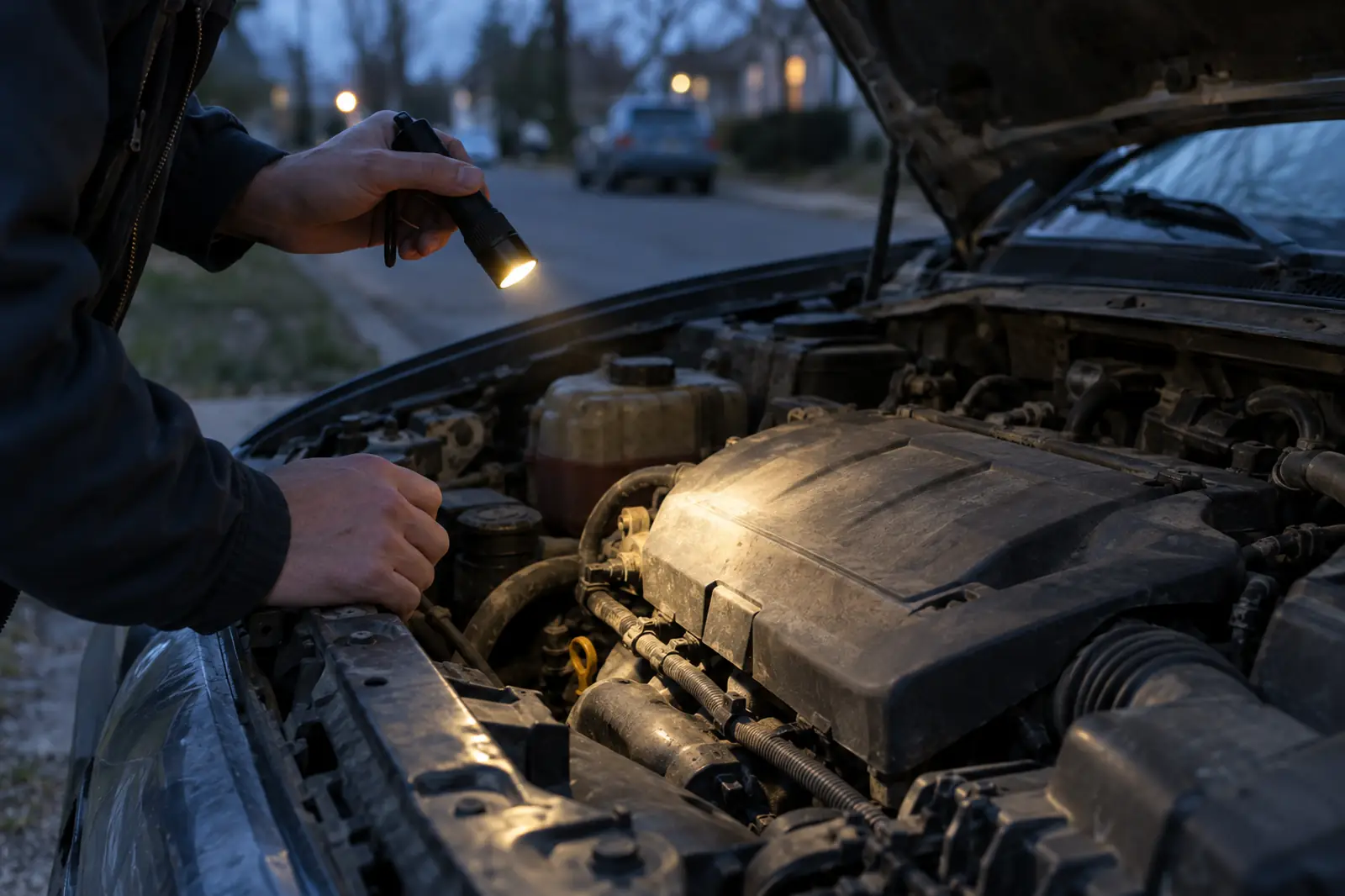
None of this replaces looking at the car. Every database on this page reports what somebody else chose to write down. A cold start, a test drive, and twenty minutes with the hood open will tell you things no report ever will — and if the car is far away or you're not confident, a mobile pre-purchase inspection costs a fraction of one bad decision.